So, you're thinking about insulating your crawl space? That's a really smart move, honestly. It can make a huge difference in how comfy your home feels, how much you pay for energy, and even the air quality inside. But, having worked in this business for a while, I've noticed a lot of folks around Meridian tend to make some pretty common blunders when they tackle this project. Doesn't matter if they're DIYing it or hiring someone. Let's chat about what to watch out for, okay? That way, you won't end up kicking yourself later.
Mistake #1: Not Dealing with Moisture First
This one? Probably the biggest mistake out there. It's a total deal-breaker. You can pile all the insulation you want down there, but if your crawl space is wet, you're just setting up the perfect breeding ground for mold, mildew, and rot. I've seen homes, especially in newer North Meridian subdivisions where construction often messes with the soil and drainage isn't always perfect, end up with some serious moisture problems in their crawl spaces. Before you even *think* about insulation, you absolutely have to make sure it's dry.
- Check for leaks: Take a good look at your foundation walls, plumbing lines, and even your HVAC ducts for any signs of water.
- Fix drainage: Is water pooling around your foundation outside? Are your gutters actually doing their job?
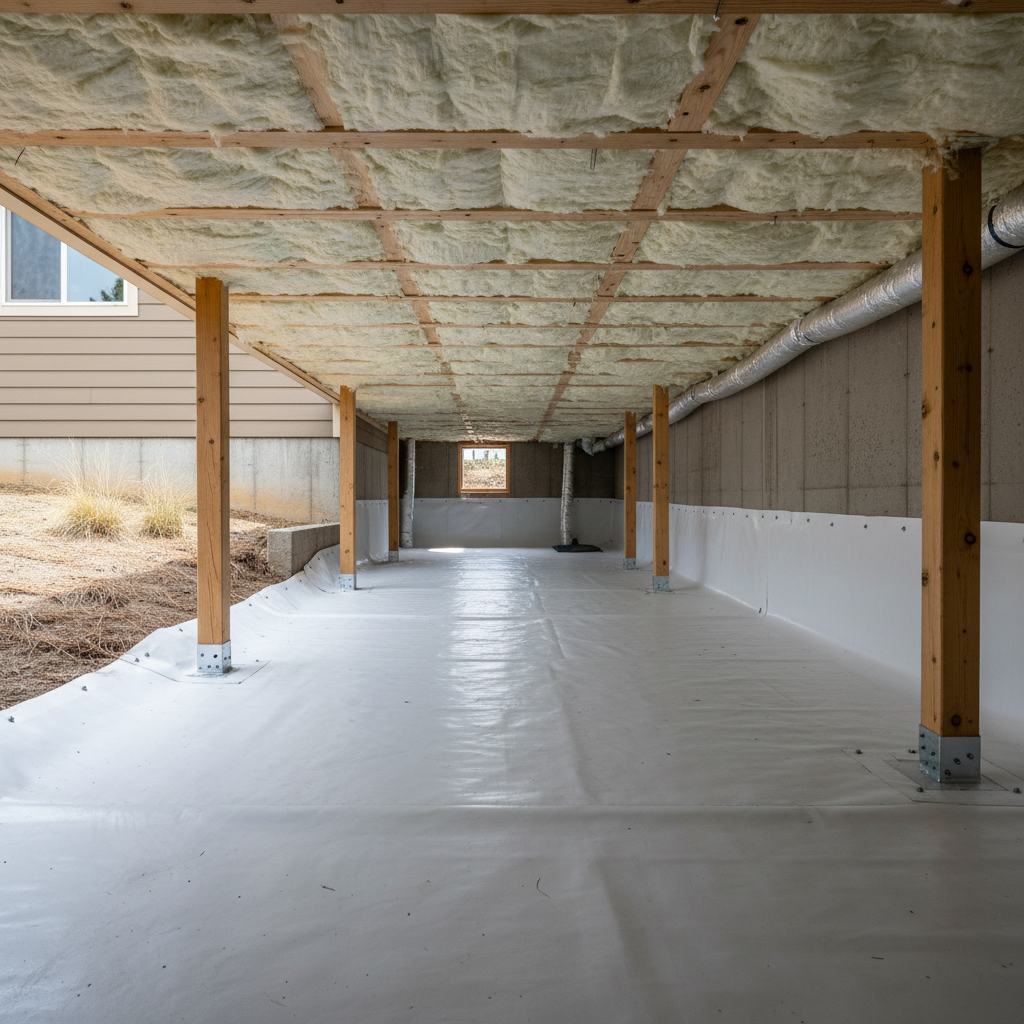
- Think about a vapor barrier: A heavy-duty vapor barrier – we're talking at least 10-mil – covering the ground is totally essential here in our climate. It stops ground moisture from evaporating right into your crawl space. No, it's not optional.
- Consider encapsulation: For those really damp crawl spaces, full encapsulation with a dehumidifier might be the best long-term fix. It's an investment, sure, but it definitely pays off.
Mistake #2: Picking the Wrong Kind of Insulation
Not all insulation is created equal, especially when it comes to a crawl space. I see a lot of people just automatically go for fiberglass batts. While they have their place, they're usually not the best choice for this particular spot.
- Fiberglass batts: These *can* work if your crawl space stays perfectly dry and sealed. But, honestly, they soak up moisture like a sponge, they sag, and they become a cozy home for pests. Once they get wet, their R-value basically drops to zero, and they turn into a mold magnet.
- Rigid foam boards: Now these are a much better option for crawl space walls and rim joists. They don't absorb water, they give you a good R-value, and they create an air seal.
- Spray foam: This is often my top recommendation, especially for rim joists and really sealing off the crawl space from the outside. Closed-cell spray foam creates an incredible air seal and moisture barrier, plus it even adds some structural rigidity. It costs more upfront, no doubt, but the performance and how long it lasts are just unmatched. That's why we at Spray Foam Pros of Meridian use it so much.
Mistake #3: Bad Installation and Air Sealing
Even the best insulation won't do its job if it's not put in right. Air leaks? They're insulation killers. Your crawl space is basically a big box, right? If that box isn't sealed up tight, you're just losing conditioned air and letting in unconditioned, often damp, air. What a waste.
- Gaps are bad: If you're using rigid foam or batts, any gaps, cracks, or unsealed edges mean air is still sneaking through. You absolutely need to caulk and foam those gaps shut.
- Rim joists are super important: That spot where your foundation meets your floor joists — the rim joist — is a huge source of air leakage. It needs to be totally sealed and insulated. This is where spray foam really, really shines.
- Vents: If you've got an unconditioned, vented crawl space, those vents need to be sealed up permanently once you insulate the walls and ground. Otherwise, you're just inviting the outside in.
Mistake #4: Forgetting About the HVAC Ducts
Lots of homes in Meridian have their HVAC ducts running right through the crawl space. If those ducts aren't properly sealed and insulated, you're basically heating and cooling the dirt under your house instead of your living space. That's a massive waste of energy, plain and simple.
Before you even insulate the crawl space itself, make sure any ducts down there are sealed at all the seams with mastic or foil tape. Then, wrap them with proper duct insulation. If you don't, you're just throwing money out the window, really.
Mistake #5: Hiring the Cheapest Bid Without Doing Your Homework
I totally get it; everyone wants a good deal. But when it comes to something as crucial as your home's foundation and how energy-efficient it is, the cheapest bid often ends up being the most expensive in the long run. I've seen plenty of really shoddy work that had to be ripped out and redone. What a headache.
- Check references and reviews: Don't just take their word for it. See what other Meridian homeowners have to say.
- Ask about their process: A good contractor will explain exactly how they plan to handle moisture, what materials they'll use, and how they'll make sure everything is properly air-sealed.
- Verify licensing and insurance: Protect yourself! Make sure they're legitimate and covered in case something goes wrong.
- Get it in writing: A detailed quote outlining materials, the scope of work, and any warranty is non-negotiable.
Insulating your crawl space the right way is a big job, but it's honestly one of the best investments you can make in your home. Just steer clear of these common pitfalls, and you'll be enjoying a more comfortable, energy-efficient home for years to come.