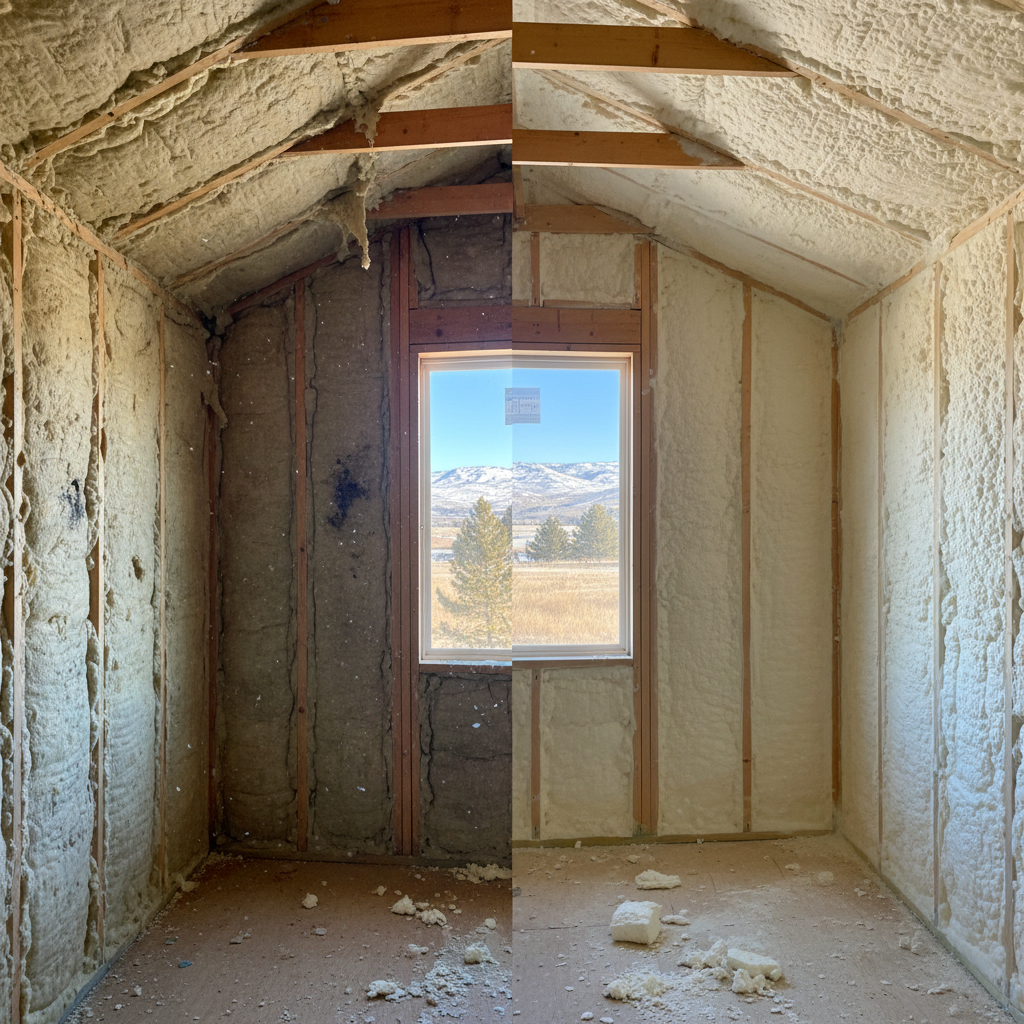
So, you're looking into open cell spray foam. Smart move for energy efficiency and comfort here in Meridian, right? But then you hit a snag: faced or unfaced? It's a super common question, and honestly, all the jargon out there can make it pretty confusing. Let's just cut through all that noise and talk about what these two options *really* mean for your home and, let's be honest, your wallet.
What's the Deal with Faced Open Cell Foam?
When we say 'faced' insulation, we're talking about a barrier—usually a thin film or paper—that's attached to one side of the foam. For open cell spray foam, this facing typically acts as a vapor retarder. Now, a vapor retarder's job is to slow down moisture vapor moving through a material. Sounds good, doesn't it? In some climates, it absolutely is. It can help stop condensation from building up inside wall cavities, which, as you know, can lead to mold and rot.
Here in Meridian, though, our climate is generally dry. We definitely get cold winters, no doubt about it, but our humidity levels usually aren't high enough to make a vapor barrier a critical component for most homes. In fact, sometimes adding a vapor retarder in a dry climate can actually trap moisture if it somehow gets in from somewhere else—like a roof leak—and then can't dry out. It's a delicate balance, that's for sure.
And Unfaced Open Cell Foam?
Unfaced open cell spray foam is exactly what it sounds like: just the foam, no extra layer. We apply it directly to the surface, whether that's the underside of your roof deck in the attic or inside wall cavities. Because open cell foam is, well, 'open cell,' it breathes. This breathability is a huge advantage in our climate. If any moisture does manage to get into your wall or attic space, unfaced foam lets it dry out much more easily. It doesn't trap it in there.
Think of it this way: your house needs to breathe a little. You don't want it totally sealed off like a plastic bag, especially not with our dry air. That breathability helps manage any incidental moisture, which can be a real concern in older homes, or even newer ones if you don't catch a small leak right away. For instance, if you've got an older place in the North End with those classic lath and plaster walls, you definitely want something that can handle a little give and take with moisture.
Cost, Durability, and Maintenance
Let's get down to brass tacks. When it comes to cost, unfaced open cell foam generally runs less per square foot than faced. You're not paying for that extra layer of material or any additional labor it might take to make sure it's installed and sealed correctly. It's a more straightforward application, plain and simple.
Durability-wise, both types of open cell foam are incredibly tough once we install them. They won't settle or sag over time like some other insulation types tend to do. The foam sticks right to the surface, creating a continuous thermal envelope. Maintenance? There really isn't any for either. Once it's in, it just does its job, and you don't need to touch it.
Appearance isn't usually a big deal since spray foam typically gets covered by drywall or other finishes. However, in an exposed attic or crawl space, unfaced foam has a uniform, slightly textured look. Faced foam, on the other hand, would show that thin film.
My Recommendation for Meridian Homes
For most homes right here in Meridian, Idaho, I almost always recommend unfaced open cell spray foam. Here's why:
- Climate Compatibility: Our dry climate means a vapor retarder usually isn't necessary, and sometimes it can even cause problems. Unfaced foam allows for better moisture management.
- Cost-Effectiveness: You get excellent thermal performance without paying for a facing you probably don't need.
- Breathability: It lets your home 'breathe,' which helps prevent moisture issues instead of trapping them.
- Simplicity: It's a simpler, more direct application, which often means a smoother installation process.
Now, there are always exceptions, of course. If you have a very specific situation, like a high-humidity indoor pool area or a commercial building with unique moisture control requirements, then a faced product or a different insulation strategy might be more appropriate. But for the average Meridian homeowner looking to insulate their attic, walls, or crawl space, unfaced open cell foam is usually the smarter, more effective choice.
We've installed countless open cell foam projects across the Treasure Valley, from newer builds in South Meridian to older remodels in Eagle, and unfaced has consistently proven to be the right fit. If you're still on the fence, or just want to chat about your specific project, don't hesitate to give us a call at Spray Foam Pros of Meridian. We're happy to walk through it with you and make sure you get the best solution for your home.